Beyond the Tourist Trail: Bali's Hidden Archaeological Treasures
Bali's most compelling historical sites lie far beyond crowded temples, revealing the island's ancient megalithic past through stone-carved caves and forgotten shrines. Discover the archaeological wonders that tell the true story of Bali's pre-Majapahit civilization.
While Bali earns its reputation as a cultural destination, the island's most captivating historical narratives are tucked away from the well-worn tourist paths. For visitors and residents seeking authentic connections to Bali's ancient past, a journey through the island's lesser-known archaeological sites offers far greater insights than the mainstream temple circuit. These hidden gems reveal layers of history carved directly into stone, providing context that standard cultural performances cannot match.
Bali's deepest historical roots trace back to the megalithic period, when skilled artisans transformed rock faces into burial chambers and sacred spaces. The Bedahulu Kingdom, which ruled from approximately the 8th to 14th centuries before the Majapahit arrival in 1343, left behind numerous stone monuments across the island. The administrative center was located in Pejeng, a district in Gianyar northeast of present-day Ubud. Scattered between the Pakerisan and Petanu rivers, this corridor contains some of Bali's most visually stunning archaeological remains, creating a natural historical trail for dedicated explorers.
Goa Gajah stands as one of the most recognizable archaeological sites, drawing crowds with its 11th century carved entrance resembling an elephant's face. While the meditation cave showcases impressive stone craftsmanship and features both Hindu and Buddhist elements alongside ornamental bathing pools, its proximity to Ubud means history enthusiasts have likely already explored it. For those seeking deeper exploration, moving beyond this popular destination opens access to more intimate and equally significant archaeological experiences.
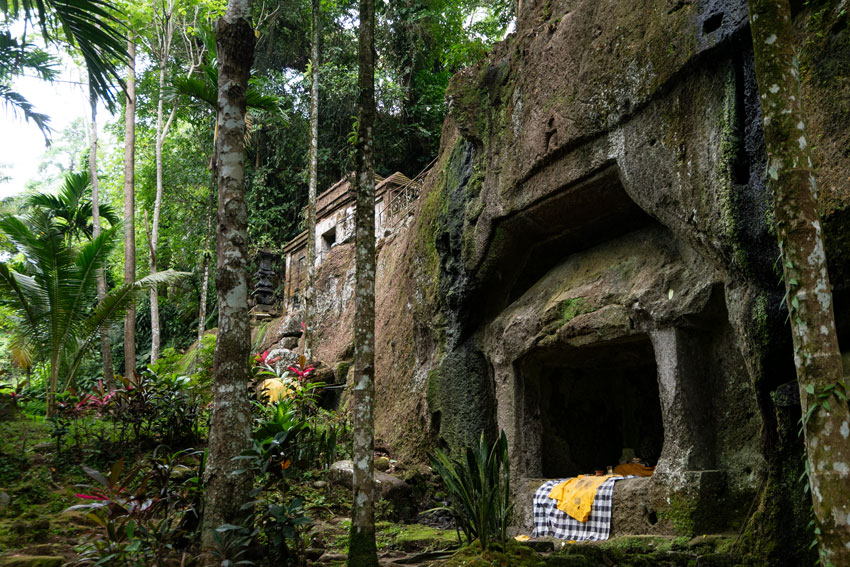
Just moments away from Goa Gajah lies Yeh Pulu, a temple of considerable historical importance that remains remarkably quiet and rural. Ancient stone reliefs adorn its surfaces, telling stories of Bali's pre-Majapahit era through carved imagery. This site exemplifies the type of overlooked treasure that rewards curious travelers willing to venture slightly off the beaten path, offering peaceful contemplation alongside genuine historical discovery.
The region between Ubud and Pejeng becomes increasingly rewarding for those willing to explore methodically. Each archaeological discovery along this route adds texture to understanding how Bali's ancient civilization developed, organized itself, and expressed its spiritual beliefs through permanent stone structures. These sites demonstrate sophisticated engineering and artistic capabilities that rival more famous Southeast Asian archaeological destinations.
Planning a historical expedition through Bali requires some advance research and possibly local guidance, as signage and accessibility vary considerably. However, the reward of standing before structures that have endured over a thousand years, relatively untouched by commercialization, offers perspective that no crowded temple performance can provide. For culture enthusiasts willing to seek them out, Bali's archaeological sites represent the island's true historical heart.